 When you think of exterior or architectural signage, most people picture flat panels, square edges and traditional wall-mounted signs. But as modern architecture evolves, so does the signage that complements it. More organizations are turning to radius corner signs—also known as curved signage—to achieve a more dynamic, architectural look.
Unlike traditional flat signage, radius signs follow the natural lines of a building by wrapping around corners or curved walls. This fluid design introduces soft curves and rounded profiles that create a more integrated, visually striking presence.
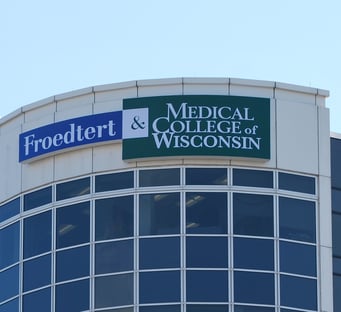
At Lemberg Electric, we’ve designed and installed radius signage for businesses across southeastern Wisconsin, including Froedtert & the Medical College of Wisconsin, and The Couture, bringing both architectural vision and local code expertise to every project. And we’re here to walk you through everything you need to know about radius signs, including their benefits and design process.
Design Appeal of Radius Signs
Radius signs don’t just complement a building; they enhance it. Their curved shape introduces a visual language that aligns with contemporary architecture, helping businesses create a memorable first impression. The appeal of radius signage can be understood through the following design advantages:
- Aesthetic harmony with architecture: Radius signs echo the curves and flows of modern architecture. Instead of appearing as add-ons, they integrate into the building’s design — creating a cohesive visual narrative. Because they follow architectural contours, they help reduce visual “stop points” (abrupt corners or edges) and deliver a smooth, fluid visual experience.
- Visual impact: Curved signage creates dimension, depth and a sense of motion. As light and shadow fall across the curved surface, the sign’s presence shifts with time of day, giving it a dynamic quality. Additionally, its multi-angle visibility ensures the signage can catch the eye from different perspectives, increasing its attention-grabbing potential.
- Psychological appeal: Curved forms tend to be perceived as softer, more organic and welcoming. For businesses in healthcare, hospitality, education or other customer-facing sectors, this softer, more approachable look can help create a sense of comfort and trust.
Functional Benefits of Radius Signs
Radius signs are both visually appealing and offer practical advantages that benefit both daily operations and long-term maintenance.
- Easy to update: Many radius signage systems are modular, allowing businesses to replace graphics, inserts or directory panels without removing the entire structure. This makes them ideal for multi-tenant buildings, hospitals, corporate campuses and locations where information changes frequently.
- Versatile applications: Curved signage works in a wide range of settings and mounting styles. Whether used as wall-mounted interior signage, exterior corner signage, suspended or ceiling-hung directional signs, projecting signs that extend from a building, or freestanding wayfinding structures, radius signs offer tremendous flexibility. This versatility allows them to integrate into offices, healthcare facilities, higher education environments, mixed-use developments, parking structures and other architectural spaces where both form and function are essential.
- Durability: Commonly constructed from anodized aluminum and weather-resistant materials, radius signs are built for longevity through precise fabrication, bending, sealing and mounting. Their durability is ideal for Wisconsin’s harsh weather conditions.
- Visibility: A radius sign’s shape allows it to be read from multiple vantage points. This is a great advantage for busy pedestrian areas, turning vehicles or building entrances with multiple approach paths. When designed correctly, the curvature improves readability rather than distorting graphics.
Radius signs blend form and function—enhancing architectural design while improving visibility, readability, and the customer experience. Learn more about our signage services.
How To Design Radius Signage for Your Business
Designing an effective radius sign requires thoughtful coordination between architecture, branding and environmental conditions, and Lemberg’s team is here to guide you through every step. From assessing the building’s curvature to engineering the right materials, our in-house designers and fabrication partners help ensure your radius signage is both visually compelling and structurally sound. Key considerations include:
- Building radius or curve: The exact curvature determines how the sign must be engineered and bent to fit seamlessly.
- Building material and sign material compatibility: Mounting methods vary depending on whether the building surface is metal, brick, glass, concrete or composite.
- Visibility and lighting: Viewing distance, pedestrian flow, traffic speed and lighting all influence sign design and placement.
- Design and legibility: Typography, contrast and graphic placement need to remain clear on a curved surface. Some design elements that work on flat signs may distort when wrapped.
- Weather durability and edge sealing: Exterior radius signs must be sealed properly to protect against moisture, UV exposure and expansion/contraction.
- Budget, timeline and maintenance: Curved signs can require more complex fabrication, so early planning helps control costs and installation schedules.
- Local codes and permits: Milwaukee-area sign ordinances vary by municipality. Lemberg routinely manages permitting to prevent delays.
With decades of signage experience, Lemberg guides businesses through each step — from concept to final installation — ensuring your radius sign is engineered flawlessly. Learn more about how Lemberg approaches sign design, fabrication and installation in our overview of the custom sign design process.
Lemberg in Action: Radius Sign Examples
Seeing radius signage in real-world applications helps illustrate how curved forms elevate both architecture and wayfinding. Check out our past project below to help get inspiration for your sign design!
- Froedtert & the Medical College of Wisconsin — In a large, high-traffic healthcare environment, smooth radius-mounted directional signs help guide visitors naturally through the campus. The curved design improves readability and wayfinding flow while maintaining a clean, modern aesthetic aligned with the facility’s architecture.
- Village Park – Menomonee Falls — This entry archway features radius signage that integrates directly into the structure’s curved framework. The result is a welcoming, cohesive entry point that feels like an intentional architectural element rather than an added sign.
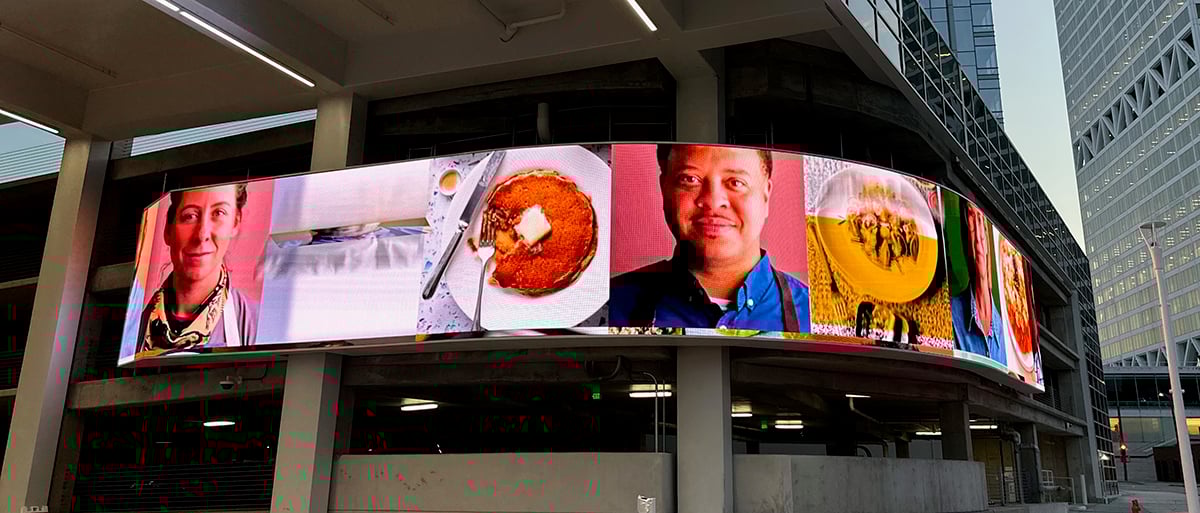
- The Couture — A large-scale digital radius display wraps the curved base of this downtown high-rise, creating a dynamic, award-winning visual element that complements the building’s modern architecture.
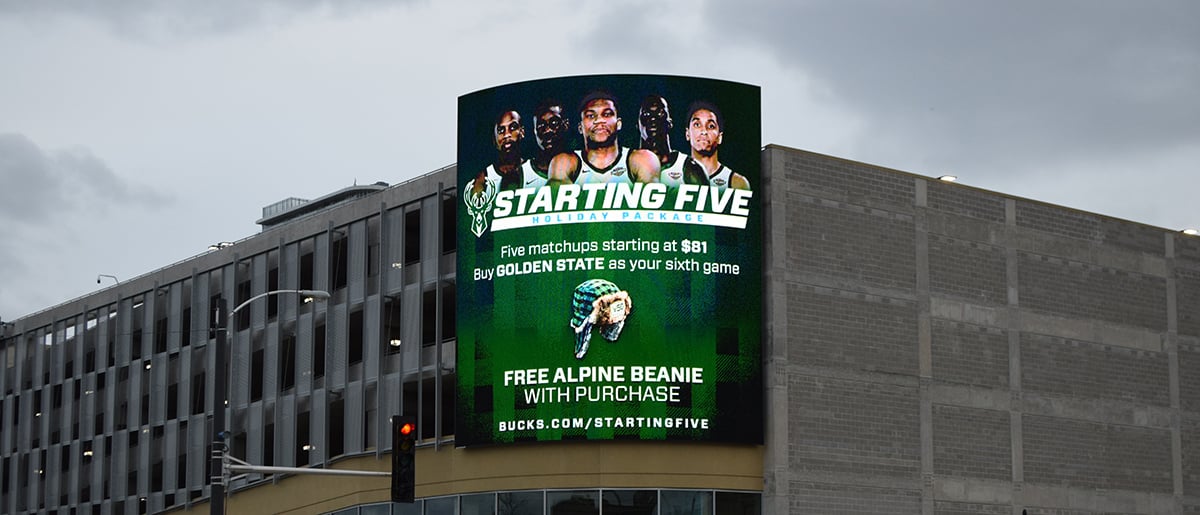
- Milwaukee Bucks Parking Structure and EMC — For this busy downtown Deer District project serving the Fiserv Forum area, Lemberg’s Signs and Lighting team installed a multi-pane Electronic Message Center (EMC) on the curved face of a 1,200-car parking garage. Positioned for visibility from a major intersection, the EMC provides flexible messaging and dynamic visuals that support marketing and wayfinding.
Check out more of our sign projects!
Why Choose Lemberg?
- Design expertise paired with the best fabrication partners: Instead of fabricating in-house, Lemberg collaborates with top-tier fabricators whose capabilities best match each project’s materials, complexity and customization needs. This ensures high-quality results while giving customers access to the most specialized resources available.
- Proven experience guiding complex projects: Our team understands the engineering behind curved signage, helping clients navigate structural mounting, radius consistency and design challenges.
- Full-service, local Milwaukee sign partner: From site surveys and permitting, to project management, installation and long-term support, Lemberg oversees every detail to ensure a quality experience from start to finish.
- Commitment to long-term durability and brand integrity: Whether you’re looking to enhance your building’s flow or create standout architectural design, every sign is built for strength, visual impact and long-term performance.
If you’re considering radius signage or exploring new ways to elevate your building, Lemberg’s sign experts are here to help. Connect with us to start your custom signage consultation.
Looking for more business signage resources? We have you covered!
- What You Need to Know Before Creating a New Business Sign
- What Is Architectural Signage?
- Relocating an Electrical Business Sign? Here’s Everything To Consider
- Exterior Business Signs and Lighting: 9 Spring Cleaning Tasks and Considerations
- Sign Professionals Do the Heavy Lifting
- Sign FAQs